
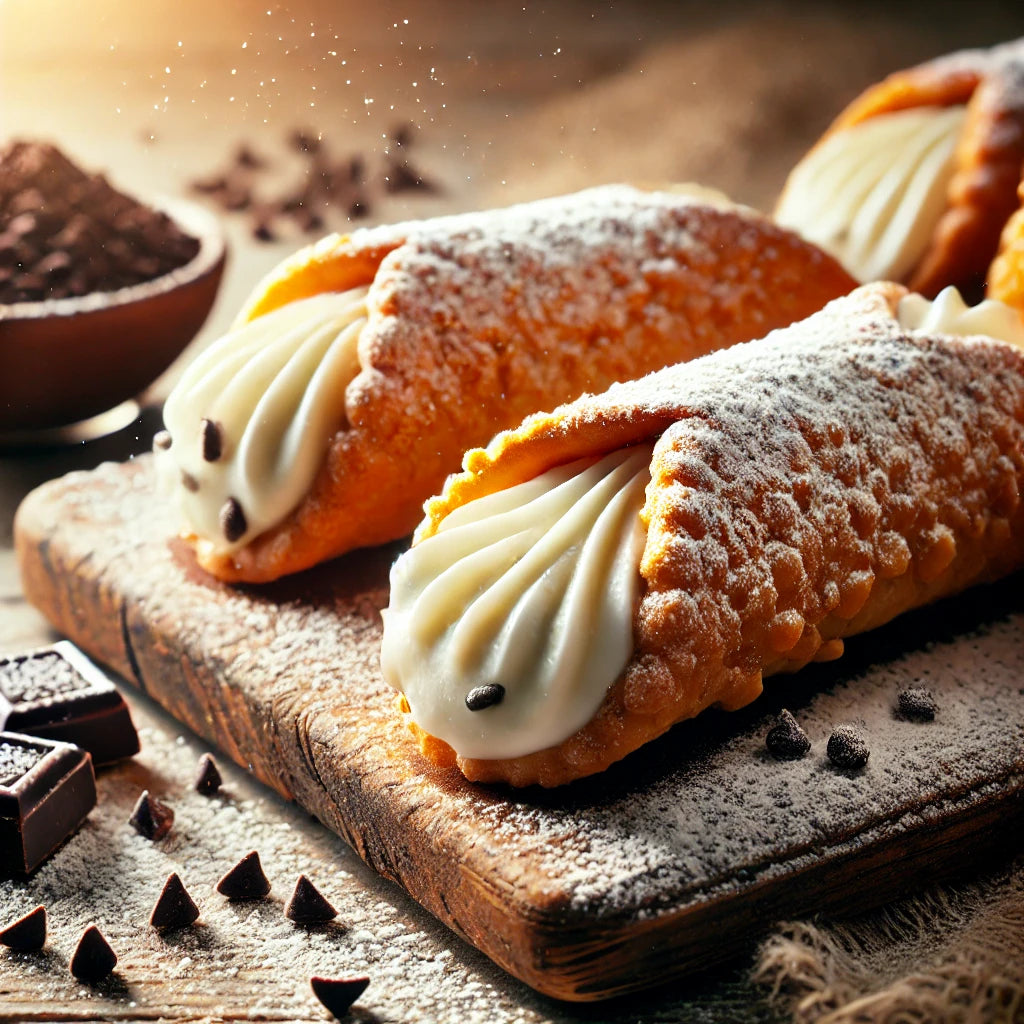
Here is the detailed recipe for traditional cannoli, including step-by-step instructions, the correct ingredient quantities per step, and the necessary materials with explanations on how to use them.
Shopping List:
For the dough (shells):
250 grams all-purpose flour50 grams granulated sugar
30 grams butter (soft, at room temperature)
1 egg
50 milliliters dry white wine or Marsala wine
1 teaspoon cocoa powder (for color and flavor)
Sunflower oil (for frying)
For the ricotta filling:
500 grams ricotta (preferably sheep's milk ricotta for an authentic taste)
150 grams powdered sugar
50 grams dark chocolate, finely chopped
1 teaspoon vanilla extract or lemon zest (optional)
For the garnish:
Equipment:
Rolling pin: To roll out the dough thinly.
Round cutter or glass (approx. 10 cm diameter): For cutting out the dough circles.
Metal cannoli forms: To wrap the dough circles around during frying. If you don't have these, you can use aluminum foil.
Paper towels: For draining the fried shells.
Piping bag: To neatly pipe the filling into the shells. A sturdy plastic bag with a cut corner also works as an alternative.
Deep fryer or deep pot: To fry the cannoli shells.
Kitchen thermometer (optional): To accurately measure the oil temperature.
Yield:
This recipe makes approximately 12-15 cannoli, depending on the size of your dough circles.
Steps:
Step 1: Making the dough for the cannoli shells
Ingredients:
- 250 grams all-purpose flour, 50 grams granulated sugar, 1 teaspoon cocoa powder, 30 grams butter, 1 egg, 50 milliliters dry white wine or Marsala wine
- Mix the dry ingredients:
- Take a large mixing bowl and sift in 250 grams of all-purpose flour. Add 50 grams of granulated sugar and 1 teaspoon of cocoa powder. This cocoa powder gives a light chocolate flavor to the shells, and the sugar provides a subtle sweetness.
Add butter:
- Cut 30 grams of butter into small cubes and add them to the dry ingredients. Rub the butter into the flour with your fingertips until you have a crumbly texture. The butter ensures a light dough.
- Whisk 1 egg in a separate small bowl. Add the beaten egg and 50 milliliters of dry white wine (or Marsala wine for an authentic taste) to the flour mixture. The wine helps make the dough crispy during frying.
Knead the dough:
- Knead the mixture until you have a smooth, elastic dough. The dough should not be too dry or too sticky. If it feels too dry, add a little more wine (a few drops at a time).
Rest the dough:
- Wrap the dough in plastic wrap and let it rest in the refrigerator for at least 30 minutes. Resting the dough allows the gluten to relax, making it easier to roll out later and ensuring the shells become crispy when fried.
Step 2: Making the filling
Ingredients:
Ingredients:
- 500 grams ricotta, 150 grams powdered sugar, 50 grams dark chocolate, 1 teaspoon vanilla extract or lemon zest (optional)
Mix ricotta:
- Take a large bowl and add 500 grams of ricotta. Sift 150 grams of powdered sugar over the ricotta and gently stir it together with a spatula or whisk. The powdered sugar dissolves well in the ricotta and creates a sweet, creamy filling.
Add chocolate:
- Finely chop 50 grams of dark chocolate and add it to the ricotta mixture. The chocolate pieces provide a nice texture in the filling. If you like an extra flavor dimension, you can add 1 teaspoon of vanilla extract or some grated lemon zest.
Chill the filling:
- Refrigerate the filling while you prepare and fry the shells. Chilling the filling makes it firmer, which makes filling the cannoli easier.
Step 3: Roll out dough and form shells
Materials: Rolling pin, round cutter or glass (10 cm), metal cannoli forms (or homemade aluminum foil alternatives)
Materials: Rolling pin, round cutter or glass (10 cm), metal cannoli forms (or homemade aluminum foil alternatives)
Roll out the dough:
- Remove the dough from the refrigerator and divide it into two parts. This makes it easier to roll out the dough thinly. Lightly flour your work surface and roll out the dough to a thickness of about 2 millimeters. The thinner the dough, the crispier the shells will be.
Cut out circles:
- Use a round cutter or a glass with a diameter of about 10 centimeters to cut out circles from the dough. This provides the ideal size for a traditional cannoli.
Wrap around cannoli forms:
- Wrap the dough circles around the metal cannoli forms. Gently press the ends of the dough together and moisten them with a little water so they stick well during frying. Make sure not to wrap the dough too tightly around the form, so you can easily remove the shells later.
Step 4: Fry cannoli shells
Materials: Deep fryer or deep pot, paper towels, kitchen thermometer (optional)
Materials: Deep fryer or deep pot, paper towels, kitchen thermometer (optional)
Heat oil:
- Pour sunflower oil into a deep pot until it's half full. Heat the oil to approximately 180 degrees Celsius (350 degrees Fahrenheit). If you don't have a thermometer, you can test if the oil is hot enough by dropping a small piece of dough into the oil. If the dough immediately starts to bubble and rises to the surface, the oil is at the correct temperature.
Fry:
- Fry the cannoli shells in small batches at a time, so they don't crowd each other. Fry them for about 2-3 minutes per side, or until golden brown. Remove them from the oil with tongs or a slotted spoon and let them drain on paper towels.
Remove from metal forms:
- Let the shells cool before removing them from the metal forms. Gently twist the shells off the forms.
Step 5: Fill and serve cannoli
Materials: Piping bag (or plastic bag with a cut corner), piping nozzle (optional)
Materials: Piping bag (or plastic bag with a cut corner), piping nozzle (optional)
Fill:
- Fill a piping bag with the ricotta filling. If you want to create a beautiful, decorative shape, you can use a star-shaped piping nozzle. Pipe the filling into both ends of the cannoli shells until they are well filled.
Garnish:
- Lightly dust the filled cannoli with powdered sugar just before serving. This gives them a beautiful, inviting appearance.
Why this is important:
By filling the cannoli just before serving, the shells remain crispy. If you fill them too early, the shells can become soggy and lose their crispness.
By filling the cannoli just before serving, the shells remain crispy. If you fill them too early, the shells can become soggy and lose their crispness.
Share and get 15% off!
Simply share this product on one of the following social networks and you will unlock 15% off!